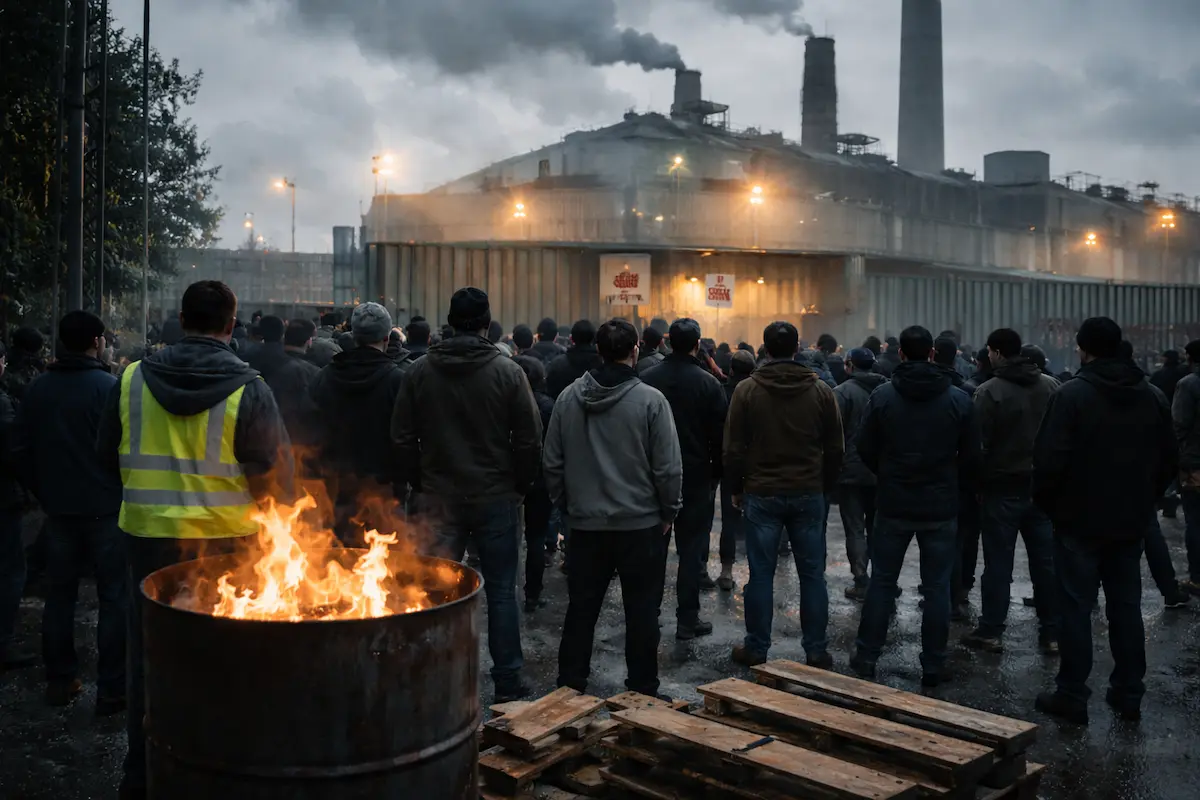
A social crisis doesn't always begin with a strike. It starts with a loss of mastery: over information, timing, the decision chain, and the ability to hold a line.
Very quickly, it stops being "an HR matter." It becomes a system under tension: rumors, internal pressure, external exposure, stakeholder conflicts, and the risk of contagion (across sites, roles, or subsidiaries).
What Turns Tension into a Crisis
A social crisis becomes unmanageable when:
- Internal governance is blurred (who decides, at what level, with what margin),
- The negotiation mandate is not held (or changes mid-stream),
- The narrative is defensive (justification, apologies, unmanageable promises),
- The timing is reactive (ultimatums, imposed deadlines, "last chances"),
- A symbol takes control (a word, an image, an incident, a "precedent").
At this stage, "appeasing" is not enough. You must rebuild a framework that makes action possible.
Goal: Securing Decisions, Not Just "Winning" an Exchange
In a social crisis, the stake is not just an agreement. The stake is to:
- Avoid setting unmanageable precedents,
- Protect the capacity for action after the sequence ends,
- Maintain a defensible line without falling into justification,
- Reduce the risk of escalation (blockades, occupations, media coverage),
- Regain control over what can (and cannot) be negotiated.
Our Role: Structuring the Faltering
At NON | NÉGOCIABLE, we intervene to re-establish architecture within the crisis:
- Decision Framework for the leader and governance,
- Sequence Strategy (scenarios, milestones, timing, options),
- Negotiation Discipline (mandate, concessions, trade-offs, conditions),
- Coherence between action, communication, and actual power.
We do not replace legal counsel, PR firms, or internal teams. We work where these functions reach their limits: when a choice must be made without self-betrayal.
Social Crisis: Negotiation Is Often the Core
A social crisis is rarely just "a fire to put out." It is a negotiation under constraint: collective pressure, face-saving stakes, narrative control, and shifting power dynamics.
To go further regarding methodology, see: Crisis Negotiation and, on collective dynamics: Social Negotiation.
Approaching a Crisis—or Already in One?
At this stage, the worst decision is letting the situation decide for you.
Total confidentiality. Rapid response.